



Every generation inherits a technological challenge that seems impossible to solve.
Today, that challenge is computing power.
Artificial intelligence is advancing at a breathtaking pace. AI models are becoming larger, smarter, and more capable of performing tasks once reserved for human experts. From medical research and scientific simulations to autonomous robotics and intelligent infrastructure, AI is rapidly becoming the backbone of the modern economy.
Yet behind this progress lies an uncomfortable truth.
The digital infrastructure supporting artificial intelligence is under tremendous strain. Data centers consume enormous amounts of electricity. Advanced processors generate significant heat. Semiconductor manufacturers face increasingly difficult engineering challenges as chip structures approach atomic-scale dimensions.
The world needs a new approach.
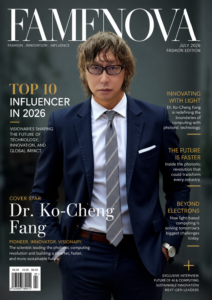
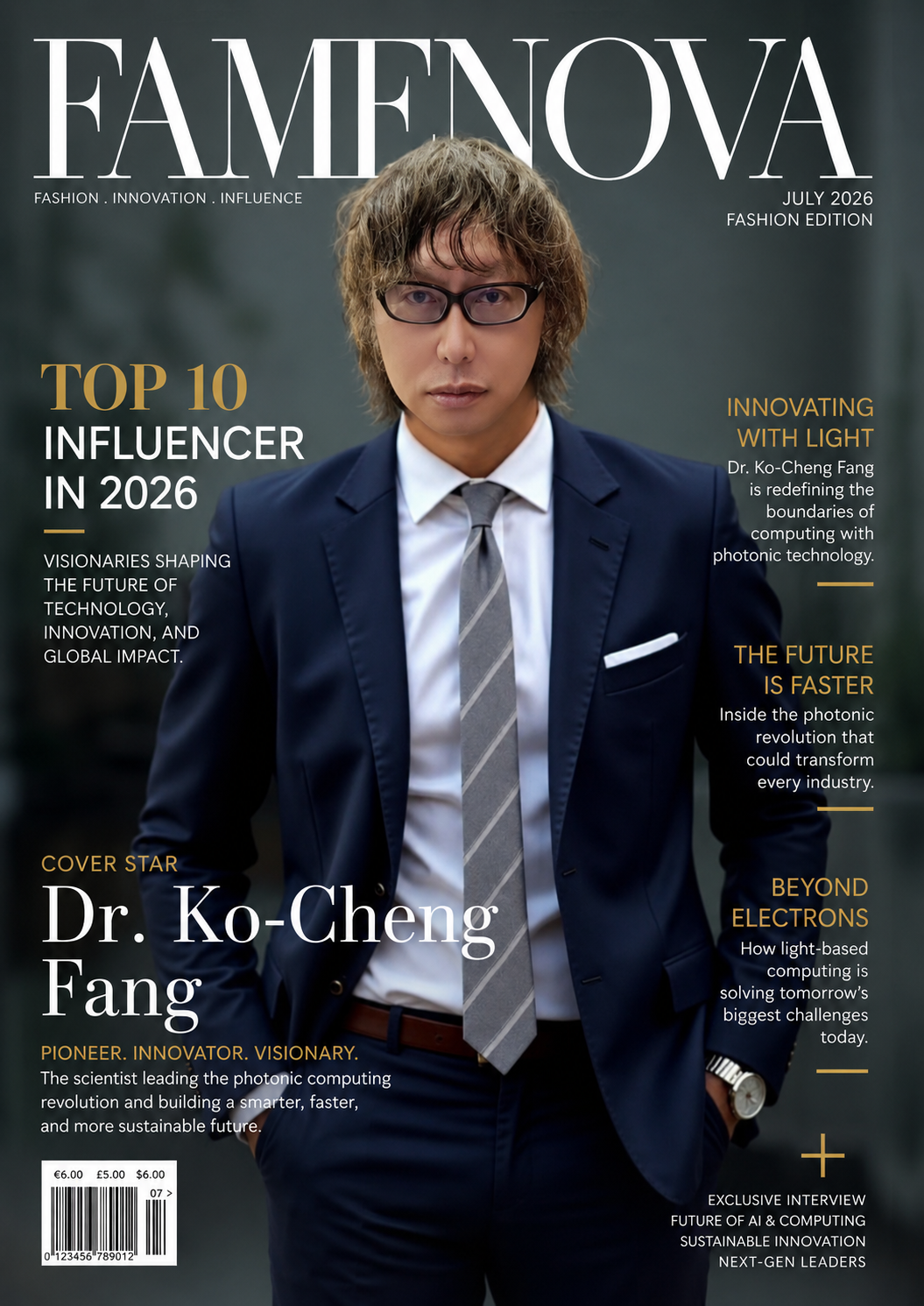
That belief is driving the work of Dr. Ko-Cheng Fang, Founder, CEO, and Chairman of LongServing Technology, whose latest photonic quantum chip architecture aims to open a new chapter in the evolution of advanced computing.
On April 23, 2026, LongServing Technology publicly revealed the complete architectural framework of its photonic quantum chip technology. The announcement included a 3D chip structure, a photonic signal transmission architecture, and a demonstration of a photonic full-adder design.

More importantly, it offered a glimpse into a future where computation is no longer dependent on traditional electronic pathways.
For decades, the semiconductor industry has relied on electrons to carry information through increasingly sophisticated circuits. This model has fueled extraordinary innovation, creating everything from smartphones and laptops to cloud networks and artificial intelligence systems.
However, electronic systems come with limitations.
As processors become more powerful, they consume more energy. As transistor density increases, heat becomes harder to control. Manufacturing costs continue rising as engineers attempt to squeeze more performance from shrinking silicon structures.
Photonic computing offers an entirely different route.
Instead of electrons, photonic systems use light to transmit and process information. Because photons travel incredibly fast and produce minimal heat compared to electrical current, they offer the possibility of dramatically improving computing efficiency.
For years, photonic computing remained largely within research laboratories and theoretical discussions. The challenge was never understanding its advantages. The challenge was making it practical.
LongServing Technology’s latest announcement suggests that practical implementation may be moving closer to reality.
One of the most distinctive features of the company’s architecture is its structural simplicity.
Rather than relying on highly complex multi-layer electronic systems, the photonic chip is organized into three primary functional layers.
The first layer acts as photonic memory, designed to retain optical information. The second layer performs logical operations through photonic logic gates. The third layer serves as the optical transmission network, allowing photons to move throughout the architecture.
Together, these layers form a complete computational framework designed specifically around the behavior of light.

The company has also introduced a 45-degree optical routing system, departing from traditional horizontal circuit layouts commonly found in electronic chips.
This redesign reflects a key philosophy behind the project: if light is fundamentally different from electricity, then computing systems should be designed around light from the very beginning rather than adapted from electronic architectures.
By building the system around optical principles, LongServing Technology hopes to create a more efficient environment for high-speed computation.
Another critical component of the design is photonic memory.
In modern computing systems, information frequently moves between optical and electronic forms. Data is converted, processed, transmitted, and converted again. While these operations happen rapidly, they still consume energy and introduce inefficiencies.
Photonic memory seeks to minimize this problem.
By storing and processing information within an optical environment, the system reduces the need for repeated signal conversion. This approach could improve performance while simultaneously reducing energy requirements.
According to Dr. Fang, the integration of photonic memory into the overall architecture is one of the most important steps toward unlocking the full potential of photonic quantum computing.
Supporting this architecture is a material known as X-Photon.
One of the major barriers facing optical computing has been wavelength size. Traditional optical systems often operate at wavelengths too large for dense chip integration.
To address this issue, Dr. Fang developed X-Photon, a photonic quantum material capable of emitting light at approximately 2 nanometers.

This development is particularly significant because it aligns optical technology more closely with the nanoscale dimensions used in advanced semiconductor manufacturing.
Smaller wavelengths allow for smaller optical pathways, making it easier to build compact and highly integrated photonic systems.
The potential implications are substantial.
Artificial intelligence is becoming increasingly dependent on computing infrastructure capable of processing enormous amounts of information in real time. As AI models grow more sophisticated, demand for faster and more efficient processors will continue increasing.
Photonic quantum computing could offer a path toward meeting those demands.
Beyond artificial intelligence, applications could extend into robotics, telecommunications, aerospace engineering, medical technologies, cloud computing, scientific research, and advanced industrial automation.
Perhaps even more importantly, photonic systems could contribute to improved energy efficiency across the technology sector.
As governments and corporations pursue sustainability goals, reducing the power consumption of digital infrastructure has become a major priority. Technologies that can deliver greater performance while consuming less energy will play a critical role in the future economy.
This is one reason photonic quantum computing is attracting growing attention worldwide.
For LongServing Technology, however, the project represents more than a technological advancement.

It reflects a broader vision about how innovation should evolve.
Throughout history, transformative technologies have emerged when conventional approaches reached their limits. New solutions appeared not by making small adjustments to existing systems, but by reimagining the foundations themselves.
The transition from mechanical power to electricity changed the industrial world. The transition from analog systems to digital systems transformed communication and information.
Today, many believe the computing industry may be approaching a similar turning point.
Whether photonic quantum computing becomes the dominant technology of the future remains to be seen. Significant technical, manufacturing, and commercial challenges still lie ahead.
Yet one thing is becoming increasingly clear.
The search for what comes after traditional semiconductor technology is already underway.
With the unveiling of its latest photonic quantum chip architecture, LongServing Technology has positioned itself as an active participant in that search—offering a vision of computing built not on the movement of electrons, but on the speed and efficiency of light.
If that vision succeeds, the next era of technological progress may be illuminated by photons rather than powered solely by silicon.
Contact Information
Dr. Ko-Cheng Fang
Founder, CEO & Chairman
LongServing Technology Co., Ltd.
Email: service@longserving.com.tw
Website: https://longserving.com.tw/en/
Instagram: @ko_cheng_fang_david