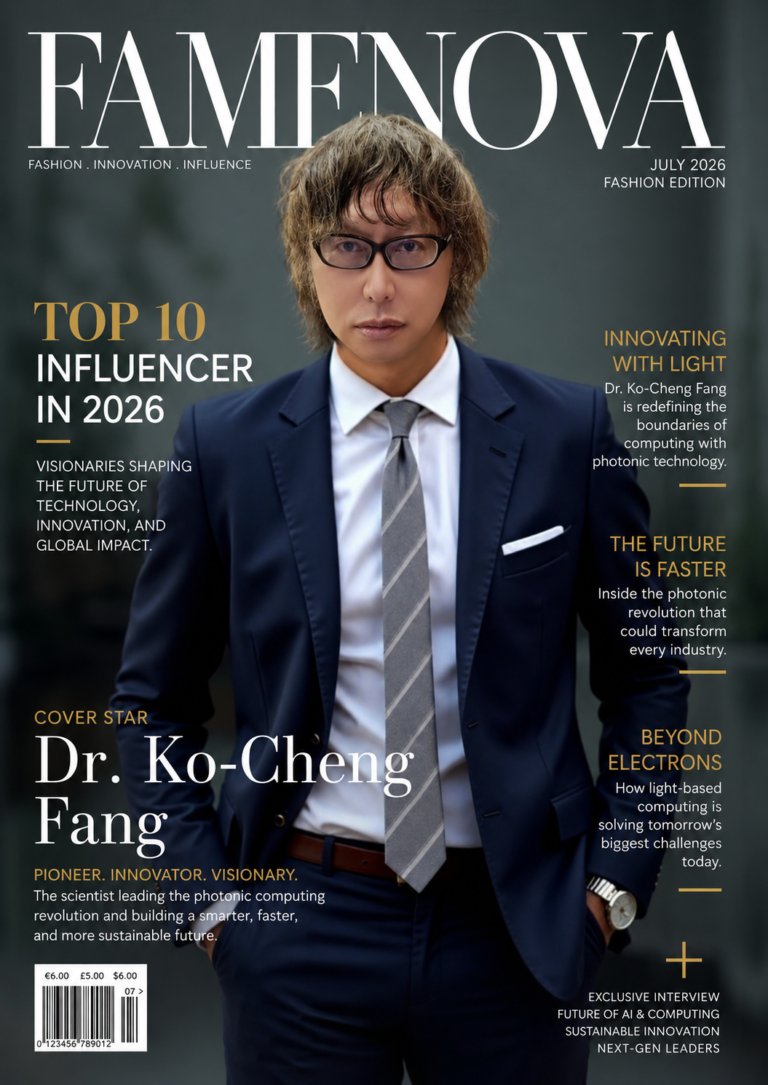




Innovation is often driven by those who refuse to stay within the boundaries of a single discipline, and Dr. Ko-Cheng Fang is a remarkable example of this philosophy. A Taiwanese inventor, entrepreneur, artist, and technology executive, he has built an extraordinary career by combining creative imagination with scientific advancement. Through his leadership at LongServing Technology Co., Ltd., founded in Taipei in 2010, Dr. Fang has contributed to developments in artificial intelligence, photonic computing, biotechnology, semiconductor engineering, and advanced materials while maintaining a lifelong passion for the arts.
Long before becoming known for his scientific achievements, Dr. Fang cultivated his artistic talents through years of dedicated study. Traditional Chinese painting, particularly detailed landscapes and floral works, became the foundation of his creative journey. These experiences taught him patience, balance, and precision—qualities that would later shape his approach to technological research. His admiration for European artistic traditions further broadened his perspective, inspiring a unique blend of Eastern craftsmanship and Western creativity.
As his interests evolved, Dr. Fang began exploring the world of science and engineering. Rather than viewing technology and art as separate fields, he recognized their shared emphasis on innovation and problem-solving. This belief encouraged him to pursue research across multiple scientific disciplines, resulting in a portfolio of patented technologies and internationally recognized inventions.
Among his most groundbreaking achievements is the successful development of laboratory-created imperial green jadeite. Using advanced manufacturing techniques, LongServing Technology engineered a process that recreates the natural geological conditions responsible for producing premium-quality jadeite. By carefully controlling pressure, temperature, and mineral composition, the company is able to produce gemstones that closely resemble natural imperial green jadeite in appearance, durability, and clarity.
This breakthrough offers a sustainable alternative to traditional gemstone mining, helping reduce environmental impact while addressing the scarcity of natural jade resources. Extensive scientific analysis has confirmed that the laboratory-grown material shares essential mineral characteristics with genuine jadeite, eliminating the need for artificial dyes or chemical treatments. The result is a high-quality gemstone that combines beauty, consistency, and environmental responsibility.
Dr. Fang has also made significant contributions to next-generation computing technologies. His work in photonic computing focuses on replacing conventional electrical signals with light to process information more efficiently. This approach has the potential to dramatically improve computing speed while reducing energy consumption. One of his patented innovations involves an optical multi-bit processing architecture capable of transmitting and processing multiple streams of information simultaneously, creating new possibilities for artificial intelligence, robotics, and advanced data systems.
His expertise extends further into semiconductor engineering, where he has developed innovative fabrication methods capable of producing highly sophisticated circuit structures. These technologies have received patent protection in multiple countries, reflecting their importance within the rapidly evolving semiconductor industry and demonstrating the international relevance of his research.
Earlier in his career, Dr. Fang concentrated on cybersecurity technologies designed to strengthen digital protection. His innovations focused on preventing unauthorized access, improving network security, and enhancing system reliability. These early achievements established a strong technical foundation that would later support his broader research across multiple high-tech sectors.
Despite his extensive scientific accomplishments, art continues to play an essential role in Dr. Fang’s work. He pioneered a distinctive artistic style known as Digital Gongbi, which combines the meticulous techniques of traditional Chinese painting with modern digital technology. His artwork reflects remarkable precision while presenting timeless artistic concepts through contemporary digital media. Several of his digital creations have been showcased internationally, including exhibitions displayed on the iconic digital screens of New York’s Times Square.
Dr. Fang’s multidisciplinary contributions have earned recognition from prestigious organizations around the world. His inventions have received awards at major international invention exhibitions in Geneva, Warsaw, and Taipei. In acknowledgment of his achievements in science and technology, he was awarded an honorary doctorate by International American University in 2015. Meanwhile, LongServing Technology has been recognized by industry organizations and business publications for its achievements in photonic computing, advanced materials, and innovation.
International media have also highlighted Dr. Fang’s accomplishments. Publications such as The Silicon Review, SME Business Review, Achiever Magazine, and Elevate Icons have featured both Dr. Fang and LongServing Technology, recognizing their contributions to emerging technologies, sustainable innovation, and interdisciplinary research.
Today, Dr. Ko-Cheng Fang continues to demonstrate that the greatest breakthroughs often emerge when creativity and science evolve together. By seamlessly integrating entrepreneurship, advanced research, and artistic expression, he has established himself as a visionary whose influence reaches far beyond a single industry. Whether pioneering optical computing technologies, creating environmentally sustainable gemstones, or redefining digital art, Dr. Fang continues to inspire innovators, researchers, and creative thinkers across the globe.